
Say "we can fill this role in 30 days" and watch the calendar roll to day 70. Technical hiring almost always takes longer than expected.
The steps look straightforward on paper. Then the job description keeps evolving. Calendars won't line up. Feedback trickles in. And candidates juggle competing offers. Teams keep waiting for the help they needed yesterday.
That gap between perception and reality costs you. Longer timelines shrink your pool of qualified candidates. In a competitive market, speed and clarity win. Find where delays creep in, and you stop losing great people at the last mile.
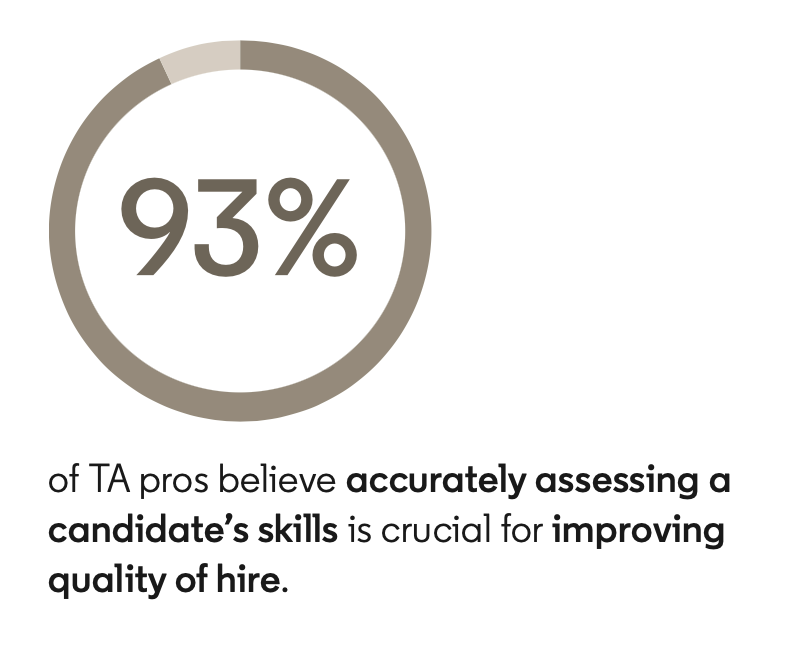
LinkedIn's latest Future of Recruiting report shows how quickly skills evolve, pushing teams to focus on skills-based hiring. In fact, 93% of hiring professionals believe an accurate assessment of a candidate’s skills translates to higher-quality hires.
Fret not; this page covers what you need to know about technical hiring. Read on to learn why it’s taking longer than expected, and where employers are losing qualified applicants.
The Nature of Technical Roles and the Technical Hiring Process
Technical roles rarely fit a template. For instance:
- A backend engineer for a healthcare platform might need experience with event-driven architectures, PHI considerations, and a specific cloud stack.
- A data engineer in retail wrangles messy clickstream data under real-time pressure.
Even identical titles hide different priorities:
- Build vs. maintain
- Prototype vs. production
- Greenfield vs. legacy modernization
The best folks bring more than tools and languages. They understand system design and have strong debugging instincts. They explain trade-offs in plain English and spot risk early.
That blend is hard to screen for quickly. That specificity drives more deliberate interviews and deeper assessments, which results in longer timelines.
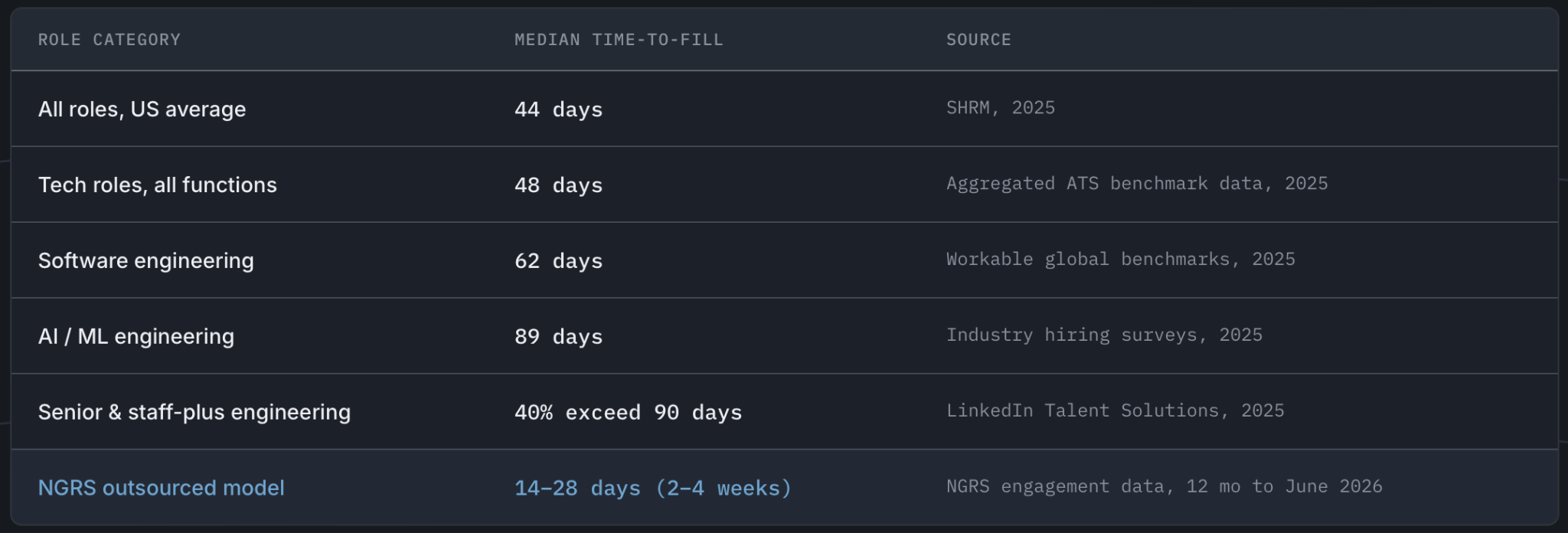
The average time to hire for engineering is higher than for most other functions. NGRS Time-to-Fill Benchmarks consistently show engineering as one of the slowest categories to close. Think: a median cycle of nearly 45 days!
The technical hiring process
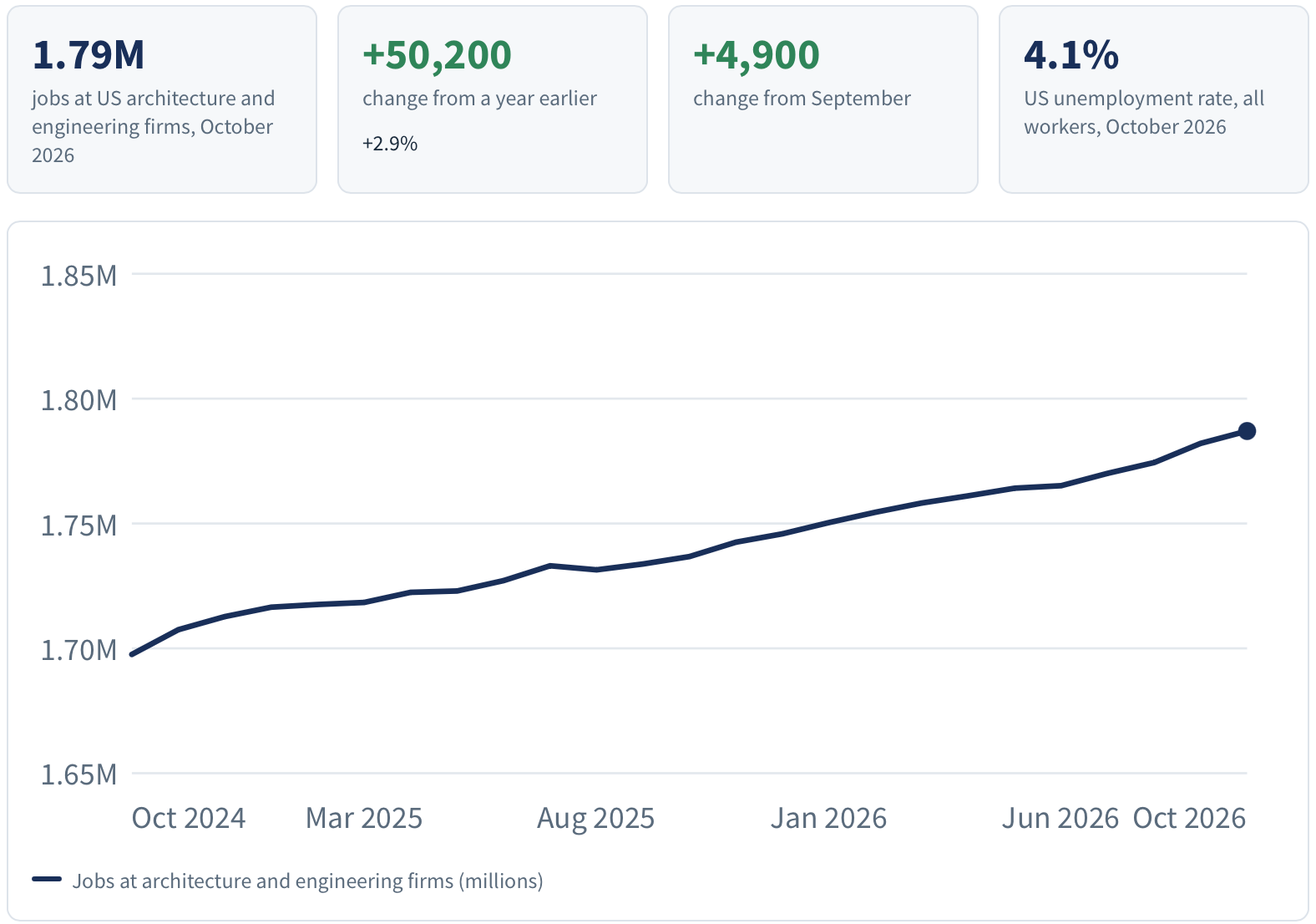
There’s no denying the massive recruitment in the technical field. In October 2026, for instance, U.S. architecture and engineering firms employed 1,787,000 people. That's a 2.9% increase (50,200 jobs) year over year, and 4,900 more jobs than in September.
But regardless, most companies or organizations follow a similar path:
- Job definition and requirement setting: Clarify the must-haves and real business outcomes. Without a sharp definition, everything downstream slows. This step takes anywhere from a couple of days to a couple of weeks.
- Sourcing and recruiting candidates: Coordinate outbound outreach and inbound applications. Building a solid pipeline usually takes one to three weeks. Faster if you've already nurtured talent pools!
- Screening and interviewing: Recruiter screens, hiring manager screens, technical assessments, panel or loop interviews, and sometimes a take-home. Many teams aim for two weeks but land closer to three or four when calendars collide.
- Decision-making and offer process: Debriefs, reference checks, final approvals, comp alignment, and offer creation. The fast version takes a few days. The slow version stretches past two weeks.
Even with a tight plan, the seams between steps are where hours turn into days. A 24–48 hour delay at each handoff quietly adds a week or more.
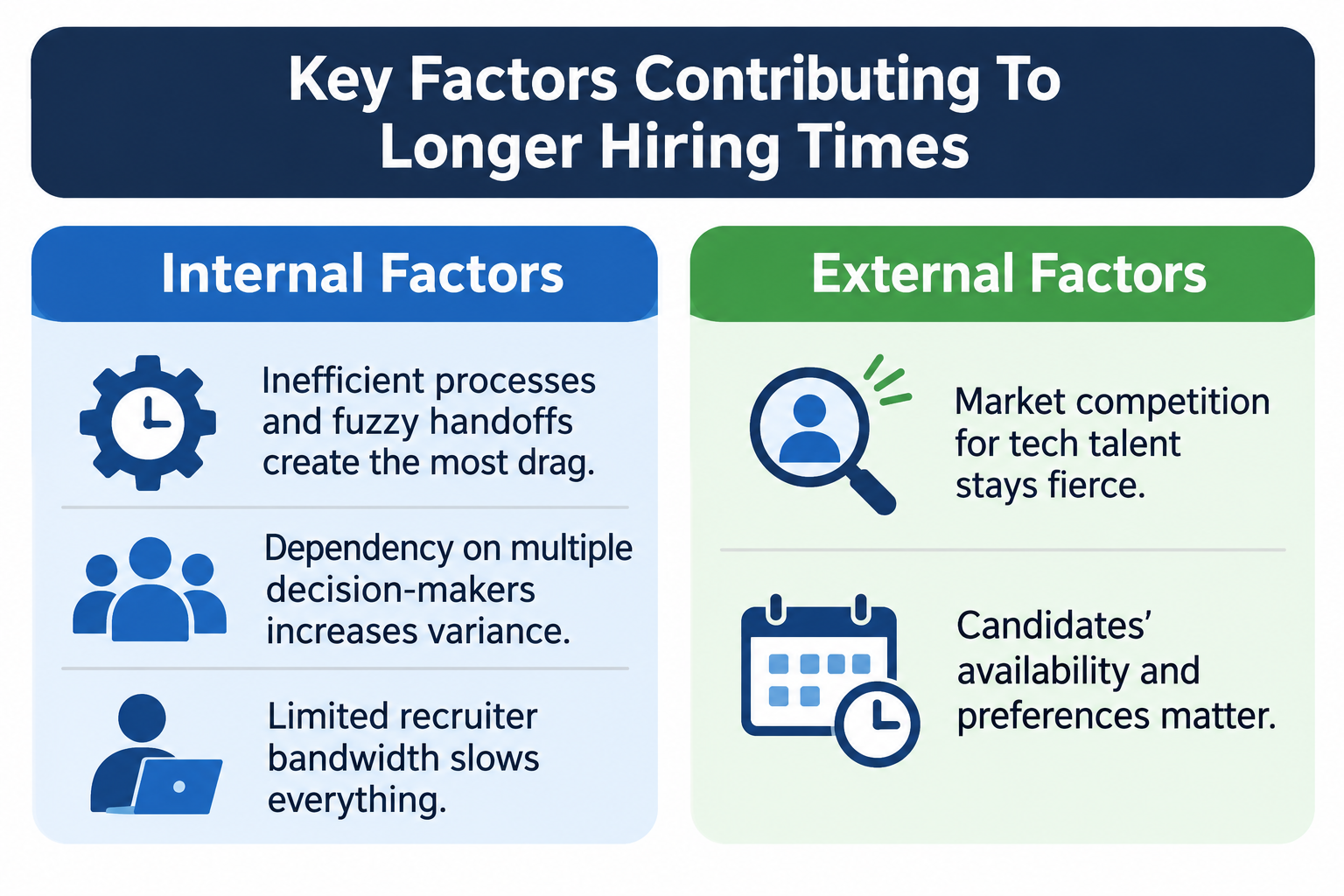
Key Factors Contributing To Longer Hiring Times
Internal factors
- Inefficient processes and fuzzy handoffs create the most drag. When your team doesn't know who's doing what by when, the ball gets dropped.
- Dependency on multiple decision-makers increases variance. When schedules don't align, decisions stall. Group consensus can be great for quality, but tough on speed.
- Limited recruiter bandwidth slows everything. When recruiters support too many open reqs, outreach slows and scheduling drifts. Even great candidates feel the lag.
In manufacturing and industrial engineering, getting the right technical talent is essential to keeping operations efficient.
Learn from Gavin Yi, CEO and Founder of Yijin Solution. He understands how unclear responsibilities and poor coordination can slow down even well-planned processes.
Yi says, "Technical hiring works best when everyone understands their role in the process. When responsibilities overlap, or decisions pass through too many people, even straightforward hiring steps can take longer than necessary.”
Ultimately, clear ownership and timely feedback help teams avoid bottlenecks and keep qualified candidates engaged.
External factors
- Market competition for tech talent stays fierce. Good engineers rarely interview with just one company. If you're slow, someone else won't be.
- Candidates' availability and preferences matter. People are coding, shipping, parenting, and generally living their lives. The longer the process and the heavier the homework, the more likely they'll decide it's not worth it.
In the AI technology industry, competition for skilled professionals makes hiring speed especially important.
Take it from Chuck Schaeffer, Co-Founder and CEO of AVTEC. He offers a perspective on why companies need to move efficiently to secure qualified technical talent.
Schaeffer explains, "Skilled technology professionals often have several opportunities to consider. Companies that take too long to make decisions risk losing candidates to faster-moving competitors.”
A clear hiring process with realistic timelines and consistent communication can make a real difference in keeping top talent interested.
How Delays Lead to Losing Qualified Candidates
From a candidate's seat, time equals signal. Timely responses suggest an organized team that values people's time.
Silence suggests the opposite. When feedback or next steps take a week, folks assume interest is low, and momentum fades. They reallocate energy to faster-moving processes.
A few patterns show up repeatedly:
- Long gaps after interviews – with no clear reason why
- Take-home assignments – that demand 8–10 hours without context or flexibility
- Disjointed interviews – where candidates repeat the same story to three different people
- Last-minute reschedules – that happen twice
In fast-moving technology sectors, delays in hiring can stall product releases and frustrate skilled engineers.
Eos Choi, Marketing Lead at LDPlayer, highlights the importance of attracting and retaining talent in a competitive market. He says, “'In gaming app development, where engineers are in high demand, candidates expect a streamlined process.”
Choi explains, "Technical candidates want to know that their time and skills are valued. Long interview gaps, unclear expectations, repetitive assessments…they all can make even an attractive opportunity less appealing.
He adds, “Companies that communicate clearly and keep the process moving have a better chance of holding candidates' interest."
Communication quality and speed are usually linked to higher offer-acceptance rates and stronger referral behavior. Also, there's the counteroffer wave. In a competitive market, employers try to keep strong performers.
Robert Half has reported rising counteroffer activity in recent years as companies attempt to retain hard-to-replace talent. In fact, 85% of Australian companies have made a counteroffer in the last twelve months.
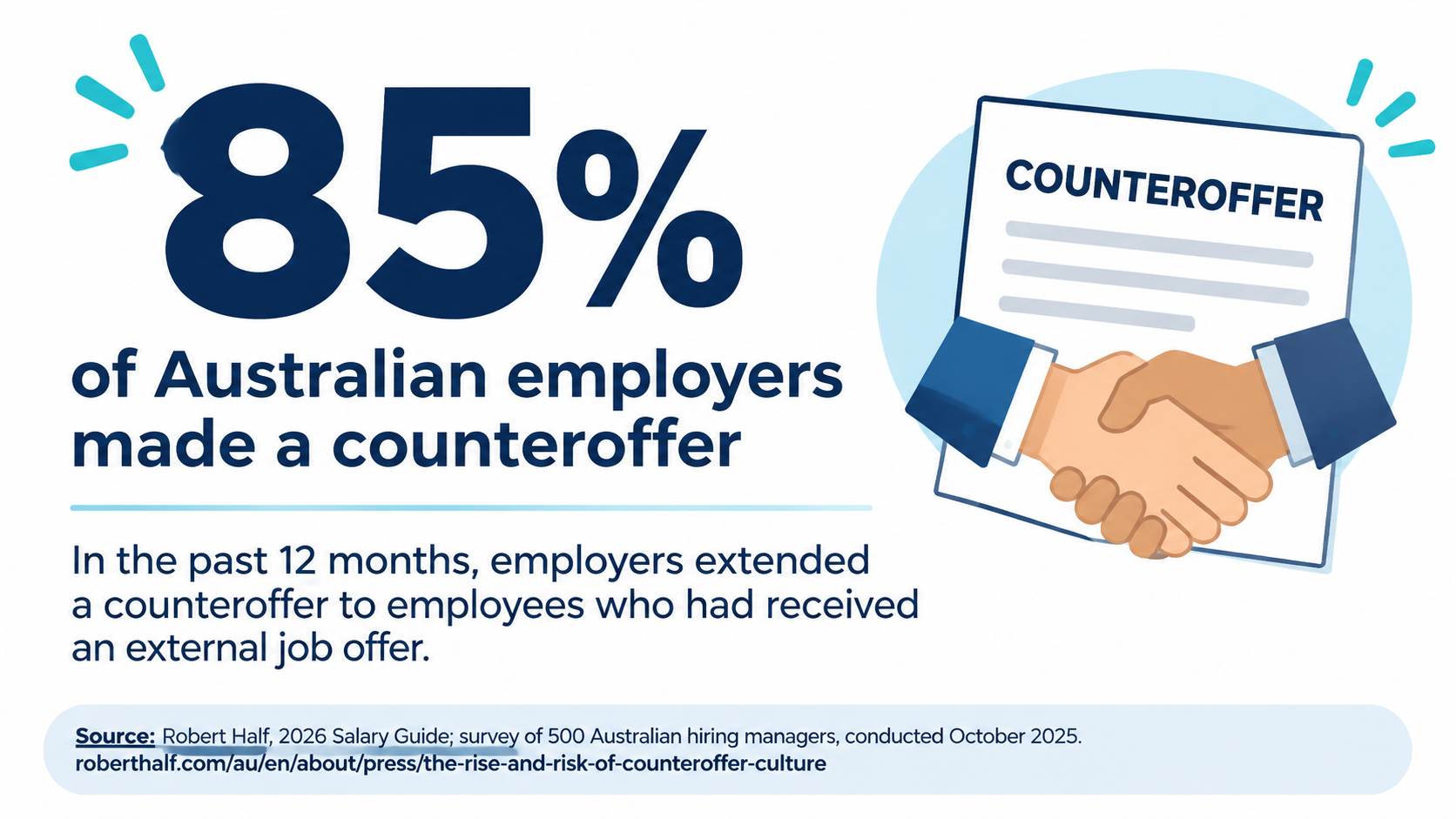
When your process slows, you create more time for rival offers and internal counteroffers to land. You also give people more time to rethink whether now is the right moment to move at all.
How To Streamline the Hiring Process
The technical field requires widespread recruitment. For instance, there’s a growing demand for skilled engineers in modern industries. That’s not to mention tech professionals needed across various sectors.
The thing is, there's no silver bullet. However, some moves consistently cut time and improve experience. That said, here’s how to streamline your hiring process in the technical industry:
1. Improve recruitment efficiency
- Start with a crisp role scorecard. Define outcomes and must-have competencies, not to mention how you'll measure them. Align early on leveling and compensation bands to avoid last-minute detours.
- Run parallel steps where possible. Schedule final interviews while an assignment is in progress. Begin light reference checks earlier with candidate consent.
- Standardize and timebox. Use structured interviews with shared rubrics. Set service-level agreements (SLAs) for feedback within 24–48 hours.
- Use tools thoughtfully. Scheduling automation and coding platforms can remove friction if you keep them candidate-friendly. Track time-to-stage and drop-off to spot bottlenecks quickly.
In FinTech, efficient processes and clear requirements help teams move quickly while maintaining quality.
Jeffrey Zhou, CEO and Founder of Fig Loans, understands the importance of setting clear expectations and using structured processes to avoid unnecessary delays.
Zhou shares, "An efficient hiring process starts with knowing exactly what you're looking for. When teams agree on the skills, roles, responsibilities, and expectations upfront, they can make better decisions without going back and forth.”
He concludes, “Clear criteria also make it easier to assess candidates consistently and avoid delays."
2. Keep candidates engaged
- Communicate transparently. Share the full process and expected timelines, including who they'll meet. If a delay pops up, say so and give a new ETA.
- Offer flexible assessments. Calibrate take-home scope to seniority. Also, give clear instructions. Plus, allow alternatives (live session, portfolio review) when appropriate.
- Close loops fast. Send same-day thank-yous and next-step notes. Even "we're still meeting as a team, expect an update Friday" beats silence.
- Personalize offers. Tie compensation and role narrative to what you've learned about the candidate's motivations. The trick? Satisfy the candidates’ needs to attract the best talent.
In home services, clear communication and coordination are essential to keeping teams and daily operations running smoothly.
Nick Wiese, Regional Vice President at Priority One Heating & Air Conditioning, offers insight into why timely updates and setting expectations matter when managing people. He says, "People are more likely to stay engaged when they know what's happening and what comes next. The same applies to hiring. “
He suggests, “Keep candidates informed about timelines, explain any delays, and follow up when promised. Even a quick update can make candidates feel valued and keep them interested in the opportunity."
Conclusion
Technical hiring is complex because the work is complex. That won't change. What can change is how intentional you are about process clarity and open communication.
Cut fuzzy handoffs. Reduce approval drag. And give candidates a clear, respectful path. Ultimately, timelines shrink, and win rates improve.
Remember, speed isn't about rushing. Remove the avoidable friction so you can spend time where it counts.
When that happens, hiring stops feeling like a slog. It starts feeling like what it should be: two groups of people figuring out if they want to work together.
If you’re looking to hire technical professionals, Apollo Technical can help. Sign up today to get started and post jobs later!


