Today, electronics manufacturing processes are subjected to repeated heating, voltage, chemical, and mechanical influences. From surface-mount technology (SMT) and PCB assemblies to flexible circuits and lithium battery production, industrial facilities require materials that withstand the test of time and temperature.
Adhesive tapes can serve as temporary masking, permanent or semi-permanent bonding, electrical insulation, or thermal protection. However, failing to select the correct high-performance tape can lead to catastrophic failures.
1. Polyimide (PI) Tape: The Gold Standard for Heat Resistance
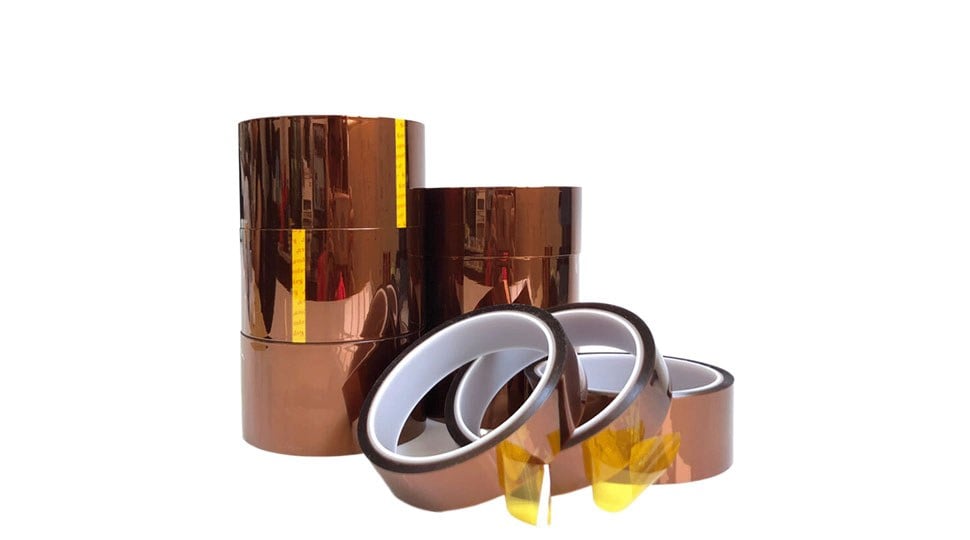
Polyimide tape, commonly known as PI Tape (or Kapton® tape), is essential for high-temperature environments. It is a polymer of polyimide monomers that remains stable across a wide temperature range, typically from -269°C to +260°C.
Key Applications:
- SMT Masking and PCB Protection: Quality polyimide tape can support PCB protection where electrical insulation and dimensional stability are important. During the reflow soldering process, it protects gold fingers and other sensitive components from molten solder and flux.
- Lithium Battery Insulation: Its high dielectric strength makes it ideal for wrapping battery cells and insulating tabs to prevent internal short circuits.
- FPC Bonding: Used in flexible printed circuit manufacturing for temporary fixing and insulation.
2. PTFE Tape: Low Friction and Chemical Inertness
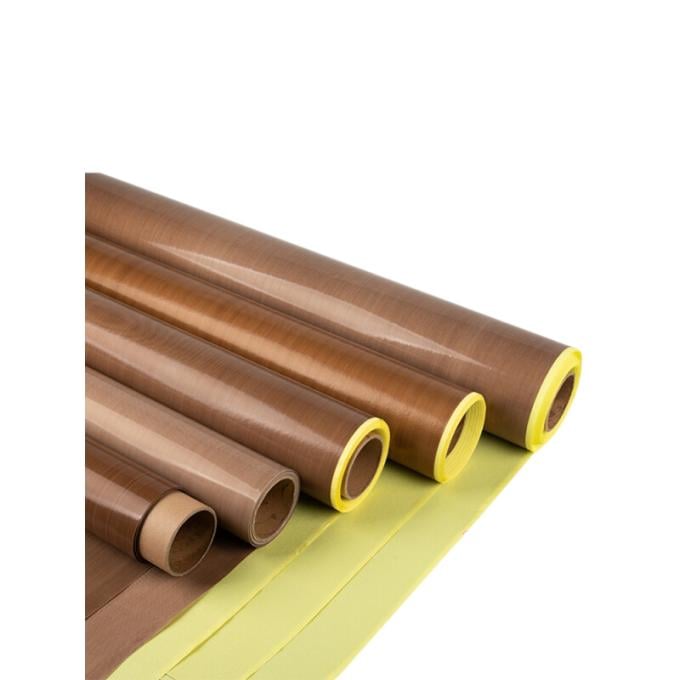
While PI tape is the leader in dielectric strength, Polytetrafluoroethylene (PTFE) tape excels in non-stick properties and chemical resistance. Often reinforced with fiberglass (PTFE Fabric Tape), it provides exceptional mechanical strength.
Key Applications:
- Heat Sealing and Packaging: PTFE tapes are widely used on heat sealing bars and vacuum packaging machines to prevent molten plastic from sticking to the heating element.
- PVC Profile Welding: In construction and window manufacturing, it acts as a release liner during the welding of plastic profiles.
- Chemical Processing: Its inert nature makes it resistant to almost all industrial chemicals.
3. Comparison: PI vs. PTFE Properties
| Property | Polyimide (PI) tape | PTFE tape |
|---|---|---|
| Heat Resistance | Up to 260°C (short-term 400°C) | Up to 260°C |
| Chemical Resistance | Excellent | Superior/Inert |
| Key Advantage | Best for dielectric strength | Best for non-stick/low friction |
| Typical Color | Amber/Gold | White/Brown/Grey |
4. Practical Considerations for Engineering Managers
When selecting adhesive tape, engineers should evaluate more than just maximum-temperature ratings. It is crucial to balance high-performance specifications with shelf-life and custom-size availability.
Poor-quality tape may leave adhesive residue after reflow, causing costly cleaning work or even product rejection. Partnering with a specialized manufacturer ensures that the adhesive formula is stable and the tape is precision-slit to your exact production needs.