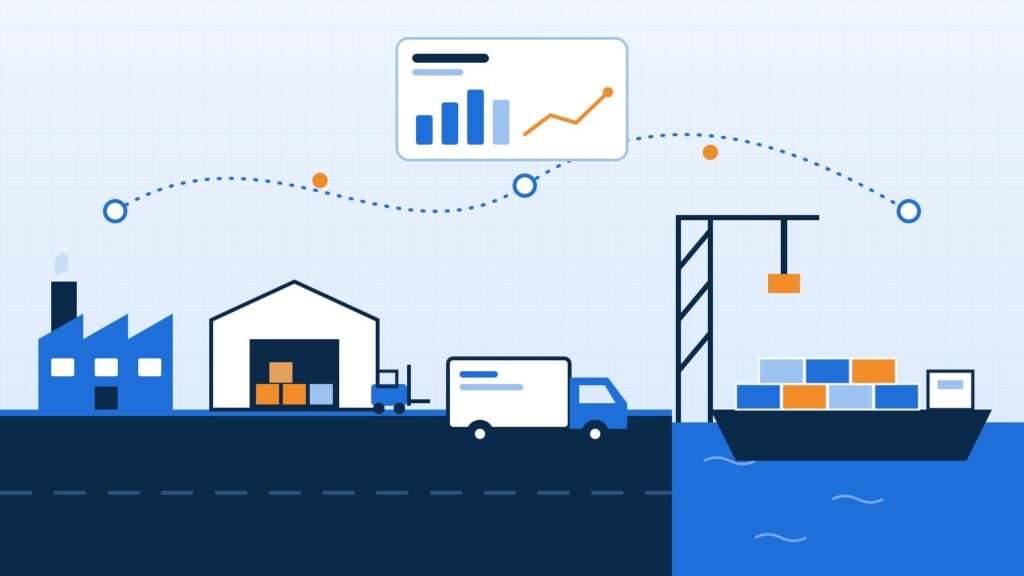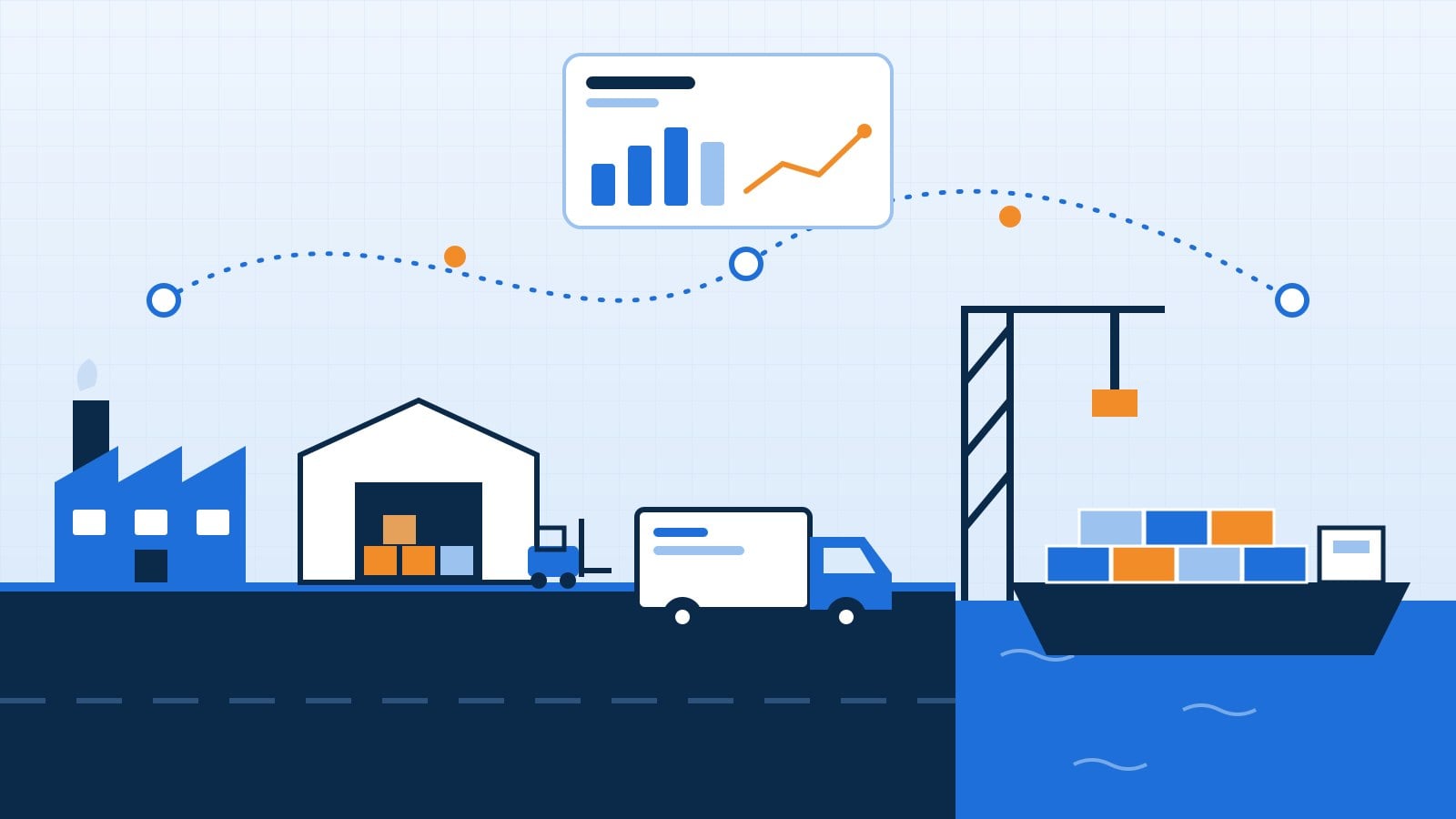
The short version: Supply chain jobs cover everything it takes to get a product from raw material to customer: planning, buying, making, storing, and moving it. The core roles are logisticians, buyers and purchasing agents, planners, and supply chain or logistics managers. Logisticians earned a median of $82,320 in May 2025, and BLS projects their employment to grow 18 percent from 2025 to 2035, much faster than average, according to the Bureau of Labor Statistics.
Apollo Technical recruits supply chain talent alongside engineers and IT professionals, mostly for manufacturers, distributors, and industrial companies. This guide covers the main jobs, what they pay, and the common ways people get in.
Supply chain jobs and pay at a glance
| Job | What the job does | 2025 median pay | Typical entry education |
|---|---|---|---|
| Purchasing manager | Runs procurement and leads buyers | $148,080 | Bachelor’s plus years of experience |
| Industrial production manager | Runs plant operations | $126,060 | Bachelor’s degree |
| Transportation, storage, and distribution manager | Runs logistics, warehouses, or the supply chain | $107,230 | High school plus 5 or more years of experience |
| Industrial engineer | Designs efficient production and supply systems | $102,440 | Bachelor’s degree |
| Project management specialist | Coordinates budgets, schedules, and teams | $102,320 | Bachelor’s degree |
| Operations research analyst | Uses math and data to solve planning problems | $88,940 | Bachelor’s degree |
| Logistician | Analyzes and coordinates the supply chain | $82,320 | Bachelor’s degree |
| Cost estimator | Prices the materials and labor for a job | $78,740 | Bachelor’s degree |
| Buyer or purchasing agent | Sources suppliers and negotiates purchases | $77,710 | Bachelor’s degree |
| Material recording clerk | Tracks inventory and shipments | $47,600 | High school diploma |
Supply chain titles vary a lot between companies. A supply chain analyst at one firm may be called a logistics analyst or materials planner somewhere else. BLS groups many of these titles together, so use the table as a guide to the type of work, then check pay for your city with our supply chain manager salary calculator.
Planning jobs
Planning jobs decide how much to make or buy, and when. They sit at the front of the supply chain and rely on data, forecasting tools, and ERP systems such as SAP or Oracle.
- Demand planner. Forecasts what customers will buy so the company does not run short or overstock. See demand planner pay.
- Production planner or scheduler. Turns the forecast into a build schedule for the plant. See production planner pay.
- Materials planner or MRP analyst. Makes sure parts and raw materials arrive in time for the schedule.
- Supply chain analyst. Studies cost, lead times, and service levels and recommends fixes. Many land here first out of college.
Procurement and sourcing jobs
Procurement teams buy what the company needs: raw materials, components, equipment, and services. Buyers and purchasing agents held about 516,100 jobs in 2025, and purchasing managers about 88,300. BLS expects about 53,600 openings a year across the group over the next decade.
- Buyer or purchasing agent. Places orders, compares suppliers, and negotiates price and delivery. Median pay was $77,710.
- Strategic sourcing specialist. Finds and qualifies new suppliers and runs bids for big contracts.
- Supplier quality engineer. Makes sure suppliers meet quality specs, a common bridge between engineering and supply chain.
- Purchasing manager. Sets procurement policy and leads the buying team. Median pay was $148,080, the highest on this list, but the role usually needs several years as a buyer first.
Logistics, warehouse, and transportation jobs
Logistics jobs move and store the product. Logisticians held about 255,100 jobs in 2025, and BLS projects about 26,600 openings a year. The largest employers were manufacturing (22 percent), professional and technical services (15 percent), the federal government (14 percent), transportation and warehousing (11 percent), and wholesale trade (11 percent).
- Logistician or logistics analyst. Coordinates purchasing, transportation, inventory, and warehousing, and picks the software that tracks it all.
- Transportation or traffic manager. Manages carriers, freight costs, routes, and compliance with Department of Transportation rules.
- Warehouse or distribution center manager. Runs inbound and outbound shipments, inventory, staff, and safety.
- Inventory control specialist. Keeps stock counts accurate and cuts loss.
Federal government logisticians had the highest median pay of any industry at $103,790, ahead of professional services ($84,730) and manufacturing ($83,990).
Operations and leadership jobs
At the top of the ladder, supply chain managers own the whole system: sourcing, storing, and moving goods to customers. BLS counts supply chain and logistics managers inside transportation, storage, and distribution managers, who earned a median of $107,230 in 2025. The top 10 percent earned more than $194,900. These roles typically ask for five or more years of related experience. Common next steps are director of supply chain, director of operations, VP of supply chain, and chief procurement officer.
Where supply chain meets engineering
Many of the best paid supply chain people started as engineers. Industrial engineers design plant layouts and workflows, manufacturing engineers set up production, and quality engineers manage suppliers. Engineers who understand both the product and the supply chain are in high demand at manufacturers right now, especially with new plants being built across the South. See is industrial engineering a good career and our new factory construction map.
How to get a job in supply chain
There is more than one way in. These are the most common paths we see:
- A degree in supply chain, business, or engineering. BLS lists a bachelor’s degree as typical for logisticians and buyers. Supply chain management, business, industrial engineering, and economics are all common majors.
- Start in an operations role and move up. Many logisticians start as material recording clerks, shipping and receiving coordinators, or warehouse leads. BLS notes that some employers accept experience in place of a degree.
- Come from the military. Military logistics experience transfers well, especially to federal contractors and defense manufacturers.
- Take an internship or co-op. Manufacturers and distributors hire many entry-level analysts from their own intern programs.
- Learn the systems. Excel, an ERP system such as SAP or Oracle, and a warehouse or transportation management system show up in most job posts.
Certifications are optional but can help, especially when changing careers. Common ones include ASCM’s CPIM and CSCP and ISM’s CPSM. BLS notes that Department of Defense acquisition roles have their own required certifications.
Skills employers look for
- Analysis. Reading data, spotting trends, and turning them into a decision.
- Negotiation. Especially for buyers and sourcing roles.
- Problem solving under pressure. Late trucks, short parts, and supplier failures happen weekly.
- Communication. Supply chain people work with suppliers, plants, sales, and finance every day.
- Systems knowledge. ERP, planning, and warehouse software, and increasingly the AI tools built into them.
Is supply chain a good career?
For most people who like solving practical problems, yes. Pay starts solidly above the national median for all jobs, which was $50,980 in May 2025, and climbs quickly into management. The 18 percent projected growth for logisticians is one of the faster rates for a business role. The tradeoffs are stress and hours: BLS notes logistics work is fast paced, and some roles cover nights, weekends, or on-call shifts when operations run around the clock. For more data on the field, see our supply chain statistics.
Frequently asked questions
What is the highest paying supply chain job?
Among the roles BLS tracks, purchasing managers had the highest median pay at $148,080 in 2025. Senior supply chain executives such as VPs and chief procurement officers often earn more, but BLS does not report them separately.
Can you get a supply chain job without a degree?
Yes. Transportation, storage, and distribution managers typically need a high school diploma plus five or more years of experience, and BLS says some employers let experience substitute for a degree for logisticians. Warehouse and clerk roles are a common starting point.
What is an entry-level supply chain job?
Supply chain analyst, junior buyer, logistics coordinator, inventory analyst, and production scheduler are common first jobs for graduates. Material recording clerk and shipping coordinator are common first jobs without a degree.
What industries hire the most supply chain workers?
Manufacturing is the largest employer of logisticians and buyers. Wholesale trade, transportation and warehousing, government, and professional services firms also hire heavily.
Looking for a supply chain role? Browse our open jobs or send us your resume. Hiring? See our supply chain recruiting services.