
Being in the same office or place isn’t the only thing that makes teamwork work these days. Teams require solutions that can keep everyone on the same page without causing problems, since they work across time zones, functions, and sectors. Even so, many firms still use a mix of apps that don’t work together. For instance, one app is for conversation, another is for documentation, and yet another is for chores.
This splitting up makes things take longer and makes people less responsible. To remedy this, businesses are deploying project management tools that put all of their teams into one system.
Lark improves how people work together by giving them a full area where they can meet, talk, schedule, document, and manage tasks all in one place. Instead of using a variety of different apps, teams utilize one platform that organizes collaboration into clear workflows. This makes sure that things move quickly and clearly on projects.
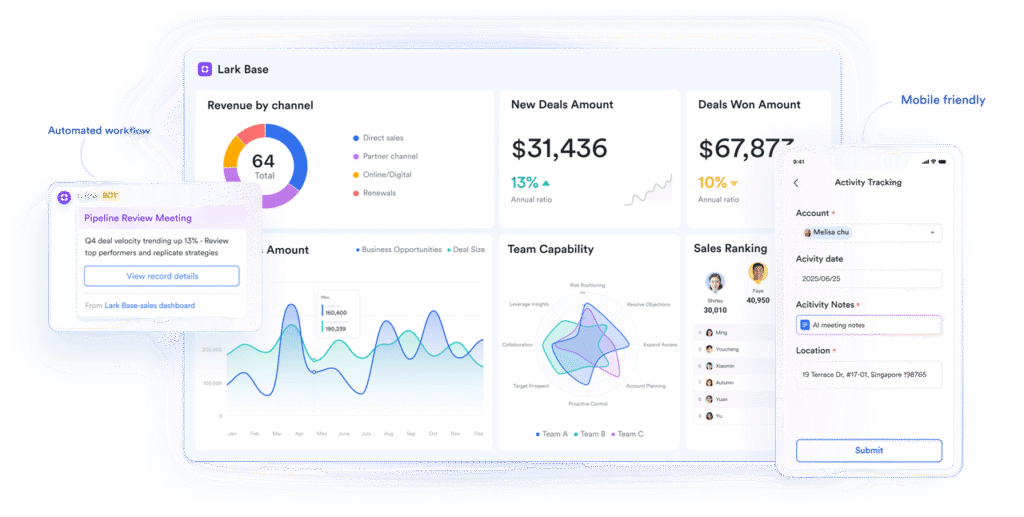
Lark Base puts all of a team’s data, resources, and updates in one place, making it easy for everyone to obtain the same dependable information. With automated workflows and data visualization, Lark Base allows you to build a centralized information hub or a CRM app, streamlining the whole process of tracking, monitoring, and processing.
Base allows teams to make databases that can be customized to fit their needs, whether they are tracking progress, customer information, or performance. Linked records show how projects are connected, dashboards provide managers a big-picture view, and filters help workers get the information they need quickly. By arranging information this way, Base makes sure that teams are always on the same page. This cuts down on duplication and makes it easier for people to work together.
Lark Messenger: Communication that drives progress

Lark Messenger makes sure that discussion leads to action, which is important for teamwork. Messenger keeps interactions cohesive and related to the tasks they help with, rather than spreading them out over different chat services.
Teams can build different channels for each project or client. This helps keep talks on track and organized. When you share files and updates via Messenger, they stay with the conversations, so you don’t have to seek for them later. Pinned updates put key information at the top, and persistent histories retain note of why decisions were made so that teams can keep moving forward as they expand.
Messenger also works well with tasks and records, so that important things that come up in conversation are acted on immediately away. This connection between communication and responsibility keeps teams working together instead of falling apart.
Lark Calendar: Aligning time with priorities

One of the trickiest elements of working together is usually keeping track of everyone’s schedules, especially when teams are spread apart. Lark Calendar helps you get more done by making sure that your time is in accordance with your team’s goals. Everyone can see when key events, evaluations, and meetings are coming up on shared calendars. This helps discourage people from arguing and keeps deadlines in mind.
Automatic time zone conversion makes it easier to plan activities throughout the world, and recurring sessions make sure that regular check-ins or strategy reviews are always the same. Calendar events can have documents or data linked to them, so everyone who comes is fully prepared with the right information.
Smart reminders help workers stay on track, and shared visibility between departments avoids overlaps that can slow down teamwork. Calendar makes time a clear and manageable resource, which helps teams stay on track and reach their goals.
Lark Docs: Capturing knowledge in the flow of teamwork

It’s incredibly vital to have documentation to keep people working together, and Lark Docs lets teams work on material together in real time, from recording it to refining it to finishing it. Docs enables people collaborate on documents together in real time, which is superior to static files that separate knowledge. In this manner, the most recent ideas are always shown in updates.
Comments link comments to the relevant portions, which makes things less complicated. Version histories hold people accountable by displaying how ideas change over time. You may turn ideas in documents into things that need to be done, and you can connect drafts to Calendar sessions for review or Base records for reference.
Docs makes sure that the information it supports stays related to the tasks it helps with. This changes papers from static files into live assets that make it easier for people to work together.
Lark Tasks: Driving accountability with automated workflows

The success of a team hinges on how well duties are defined and written down. Lark Tasks makes sure that every task is clear and can be measured. Employees know what they need to do, supervisors keep an eye on things, and projects move forward at a steady pace.
Dashboards show you what’s going on right now, repeating tasks take care of items that need to be done over and over, and smart reminders help you stay on track with your deadlines. You can alter the task views for each person or team so that they only see what they need to.
Tasks also features an automated workflow that sends out notifications, routes assignments, and updates progress to get rid of inefficiency. Tasks build accountability into processes to make sure that teamwork is not only collaborative but also constantly productive.
Lark Meetings: Turning discussions into outcomes

Meetings are still necessary for working together, but they often squander time without making things clear. Lark Meetings makes sure that meetings are productive by giving people the tools they need to work together. Teams that aren’t in the same place may rapidly get on the same page with high-quality video and screen sharing. Collaborative notes let you remember decisions as they happen.
You may connect action items from meetings directly to tasks or records, which makes sure that follow-up is quick and obvious. Recordings keep crucial conversations for those who couldn’t be there and for later use, which means you don’t have to do things again.
With integrated chat, teams may give feedback in real time during presentations, ensuring that everyone gets a chance to speak. Lark makes meetings more productive by making them more focused on getting things done. This helps people work together and makes sure that every topic is useful for the task that has to be done.
Conclusion
These days, working together takes more than simply hard work. It needs tools that make it easy to communicate, plan, keep records, be responsible, and make decisions. Lark is all modern teams need.
Base is for keeping track of structured records, Messenger is for making sure conversations lead to progress, Calendar is for making sure everyone is on the same page, Docs is for keeping track of new information, Tasks is for making sure everyone is responsible through automated workflows, and Meetings is for turning discussions into results.
Lark puts all of these aspects into one place, getting rid of the complications that arise with using different tools and replacing them with clarity, speed, and responsibility. Workers know what they need to accomplish, leaders can see how things are doing, and projects move forward without any extra delays.
Lark turns teamwork into a network that always achieves results in a business world where how well teams work together influences how well they accomplish their tasks.


